The red tomato with a small strawberry hanging off it is the most recognisable object in sewing, and most people who own one have no idea what the strawberry does. It is not decorative.
The strawberry is an emery
It is filled with emery powder — finely crushed abrasive mineral, the same material used on nail files and sharpening blocks.
Push a pin or needle into it a few times and pull it out, and the emery scours the surface: it removes light rust, cleans off adhesive residue and starch from fabric finishes, and polishes the point so it passes through cloth cleanly again.
A blunt or sticky needle is the commonest cause of snagged fabric and skipped stitches, and it is fixed in about three seconds by a tool most people have owned for years without using.
It cannot re-sharpen a genuinely bent or broken point. That needle goes in the sharps container.
Why a tomato
The usual explanation is Victorian: a tomato placed on a mantelpiece was said to ward off evil spirits, and out of season a stuffed fabric substitute stood in — later repurposed for pins. It is a good story and the evidence for it is thin.
What is documented is that the tomato shape became a mass-produced standard in American sewing in the early twentieth century and never changed, because the shape works: a dome presents its surface at every angle, and the segmented seams give a grip.
The filling
Traditional tomatoes are packed with sawdust or wool waste, both of which are dense enough to hold a pin at whatever angle you push it in.
Wool has a genuine advantage: it contains lanolin, which leaves a light oily film on a pin and slows rust. This is not folklore — it is why wool roving is still the preferred filling among people who make cushions by hand.
Cheaper cushions use polyester fibrefill. It works, it is lighter, and it does not hold pins as firmly — a cushion that lets pins lean over is usually polyester filled.
What no cushion should be filled with is anything that holds moisture. That is what rusts pins.
Sizes
Tomatoes come from around three inches to nearly five. The larger sizes matter more than they sound: a four-and-three-quarter-inch cushion holds several hundred pins and stays put on a table, while a small one migrates and tips.
For upholstery and heavy work, larger is better — the pins are longer and need more depth to sit securely.
Every listing here gives the diameter, because the photographs are all identical.
Looking after one
Keep it dry. A cushion left in a damp room transfers moisture to every pin in it, and a cushion full of rusty pins has to be emptied and started again.
Do not wash it. Sawdust and wool filling absorb water and take weeks to dry through, and a damp core will not dry from the outside. Surface marks come off with a barely damp cloth.
Empty and inspect it once in a while. Pins at the bottom of a cushion that has been in use for years are the ones that rust first, and one rusty pin will mark fabric permanently.
Which pins go in it
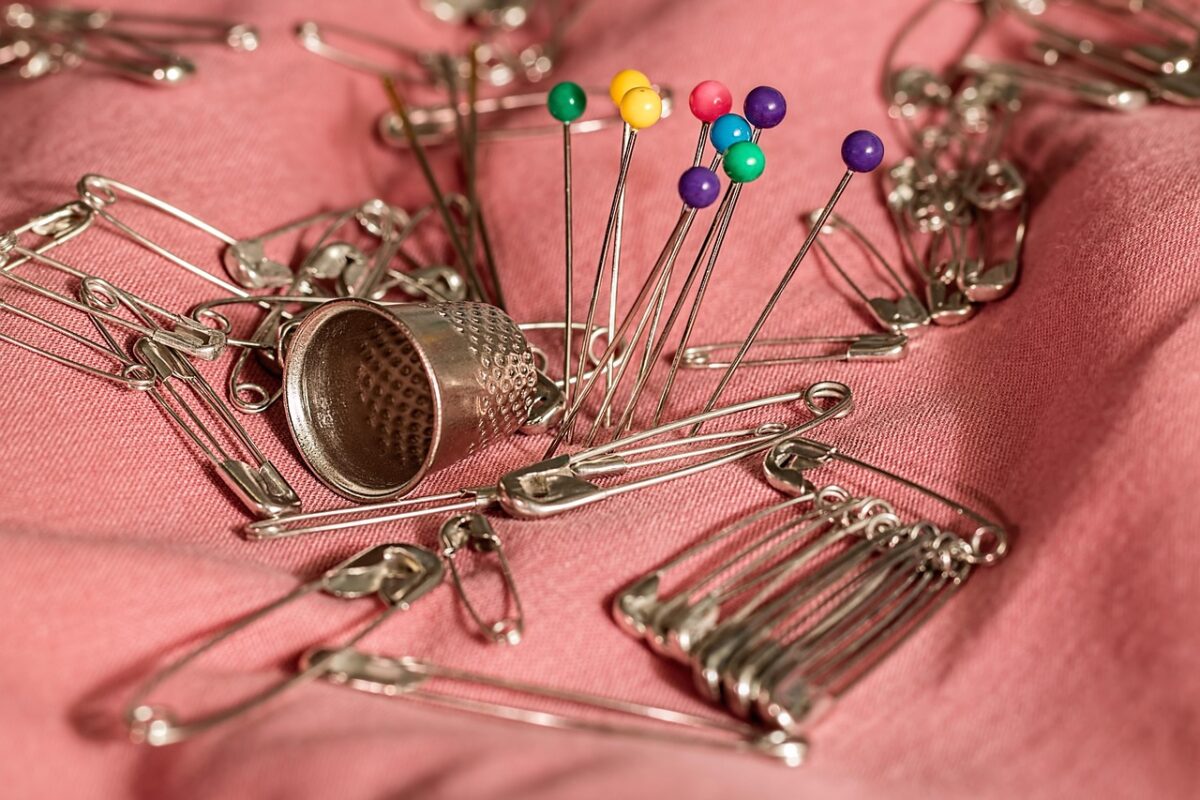
Glass-head pins are the useful default: the head survives an iron, unlike plastic, which melts onto the fabric and onto the iron plate.
Length and thickness matter with the fabric. Fine silk pins for delicate cloth, standard dressmaking pins for most work, long thick pins for upholstery and multiple layers.
Where a cushion comes with pins, the listing says how many and what type. Where it does not include pins, the listing says that too — a cushion photographed full of pins that arrives empty is the single most common complaint in this category, and it is a description problem rather than a product problem.
When to replace it
A tomato lasts decades. It is finished when the fabric has worn through at the top from repeated use in one spot, or when the filling has compacted so much that pins no longer grip.
Compacted filling can sometimes be revived by working the cushion between your hands. Worn fabric cannot.
The alternatives on this shelf
The tomato is not the only answer. A magnetic pin holder is better if you drop pins on a carpet. A wrist cushion is better if you work standing at a table. A wooden-based Japanese pincushion stays put on a bench better than anything else.
The tomatoes themselves, in every size, are on the tomato pin cushions page, and the cushions that arrive with a full set of pins are under pin cushions with pin sets.
Sharpening a needle that has gone sticky
The emery strawberry deals with three separate problems, and only one of them is bluntness.
Adhesive residue from interfacing, stabiliser or tape builds an invisible film on a needle and makes it drag. Emery scours it off in a couple of passes.
Starch and dressing from new fabric does the same thing more slowly.
Light surface rust on a needle stored in a damp room comes off, though a pitted needle is finished.
What it will not do is restore a bent point or a burred eye. Test by drawing the needle across a thumbnail: if it catches, and emery does not fix it in a few passes, replace it.